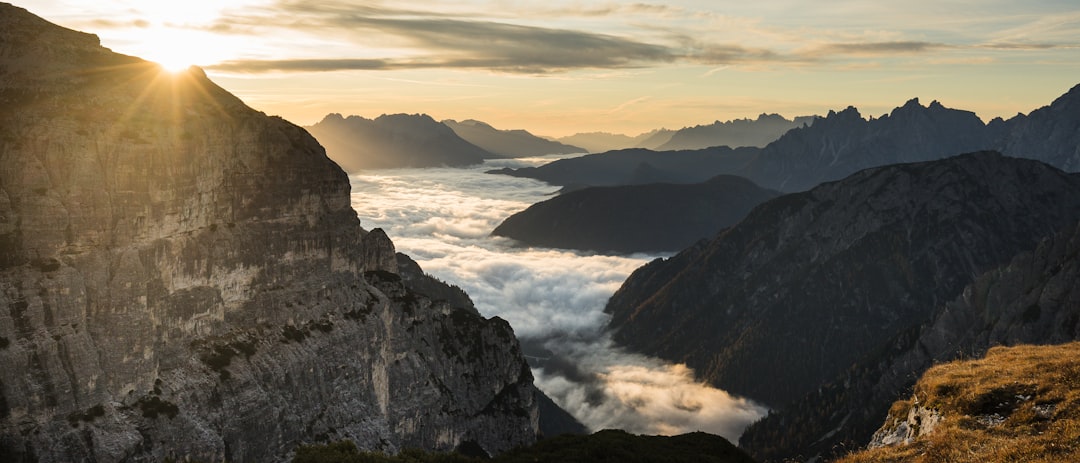

The air up here bites, sharp with pine and something ancient, something that smells of rock and ice and sun-baked earth. It’s a clean, invigorating slap to the face, a stark contrast to the exhaust fumes and tourist-trap perfume of the lowlands. This is where the Alps get serious, where they shed their gentle, rolling green for a dramatic, almost theatrical display of spires and sheer rock faces that stab at the sky with unapologetic arrogance. You’re in the Dolomites, a place where Italy and Austria had a baby, and that baby inherited both parents’ best traits: the passion for good food and wine, the meticulous efficiency, and a deep, unwavering respect for mountains that look like they were carved by a god with a very sharp knife.
This isn’t just pretty scenery for a postcard; it’s a playground for anyone who understands that the best views are always earned. The trails here aren’t just paths; they’re invitations to push your limits, to feel the burn in your calves, the sweat on your brow, and the absolute, unadulterated joy of reaching a summit where the world stretches out beneath you, an endless ocean of jagged peaks and impossibly green alpine meadows. It’s a place that demands your attention, your effort, and in return, it gives you experiences that will make those flatlander memories feel utterly insignificant. If your idea of a good time involves strapping on boots and breathing thin, cold air while surrounded by geological marvels, then you’ve just found your next obsession in these magnificent Italian Alps.
The peculiar pale rock, a type of dolomite limestone, catches the light in ways that change by the minute, shifting from a soft, almost ethereal glow at dawn to a fiery, impossible orange at sunset, a phenomenon the locals call Enrosadira. It’s not just a visual spectacle; it’s a geological marvel, a UNESCO World Heritage site that truly earns its designation. The sheer scale of these formations, rising abruptly from pastoral valleys, is enough to make you feel tiny, insignificant, and utterly alive all at once. You’ll find yourself craning your neck, mouth slightly agape, trying to comprehend the millennia of tectonic forces that sculpted such an alien landscape right here in northern Italy, a place that feels a world away from the Roman ruins or Venetian canals.
The Hero Spot: Seceda’s Blade Edge
You want iconic? You want something that will make your friends gasp and immediately ask “Where is that?” Then you point your compass towards Seceda. Getting there is almost too easy, which is both a blessing and a curse. You hop on a series of lifts from Ortisei, ascending through pine forests and then bursting out above the tree line, and suddenly, there it is: the colossal, jagged ridge, a geological saw blade tearing at the sky. It’s a view you’ve probably seen plastered all over Instagram, and for good reason—it’s genuinely, breathtakingly spectacular, even if you have to elbow a few selfie-stick warriors out of the way to get a clear shot.
The beauty of Seceda isn’t just its photogenic qualities; it’s the sheer audacity of its form. Those distinct, sharp peaks drop away dramatically into the Val Gardena, creating an illusion of infinite space. You can walk along the ridge, feeling the wind whip past your ears, gazing down at the green slopes dotted with tiny chalets, and then across to the distant, equally impressive Sassolungo and Sella groups. It’s a panorama that makes you feel like you’re standing on the edge of the world, with nothing but raw, untamed nature stretching out before you. The light plays tricks up here, constantly shifting, making the rock faces appear to breathe and change color with every passing cloud.
While it might be a bit of a circus during peak season, especially around midday, the sheer magnitude of the landscape still manages to overwhelm any minor annoyances. You can find quieter spots just by walking a little further along the trails that fan out from the top of the lift, perhaps towards the Seceda Alm or the Pieralongia hut, where the crowds thin out and you can truly appreciate the silence, broken only by the distant clang of cowbells. Just remember to look up from your phone; the real magic isn’t in capturing the moment, but in letting it wash over you, feeling the immensity of those ancient peaks. This place is a masterclass in natural drama, a stage set by forces beyond our comprehension, and you’ve got a front-row seat.
The Unsung Hero: Mount Schlern
Now, if Seceda is the rockstar everyone’s screaming for, then Mount Schlern is the quiet, brooding artist in the corner, equally brilliant but demanding a bit more effort to appreciate. You won’t find a direct gondola whisking you to its summit, and that, my friend, is precisely its charm. This mountain, with its distinctive, table-like plateau and two prominent peaks, Santner and Euringer, stands guard over the Seiser Alm, one of Europe’s largest high-altitude alpine meadows. It’s a place for those who prefer the crunch of gravel under their boots to the whir of a lift, for those who seek solitude and a panoramic reward that feels genuinely earned.
The hike up Schlern is a proper undertaking, a steady climb through forests and then out onto open, rolling meadows, where the air thins and the views expand with every switchback. You’ll pass traditional alm huts, their wooden walls weathered by centuries of sun and snow, offering a momentary respite and perhaps a glass of local milk or a hearty plate of speck. The ascent itself is a journey, not just a means to an end. It’s a chance to feel the rhythm of the mountain, to hear the whisper of the wind through the grass, and to truly disconnect from the digital clamor of modern life.
Once you reach the Schlernhaus, a historic mountain hut perched near the summit, the world unfolds in a breathtaking 360-degree spectacle. You’re looking out at the very Dolomites you’ve come to see, but from a different perspective, a more intimate one. The Seiser Alm stretches out below like a green velvet carpet, dotted with tiny chalets and grazing cows, while in the distance, the jagged teeth of the Rosengarten, Sassolungo, and even Seceda itself rise majestically. It’s a view that feels less like a photo op and more like a profound connection to the landscape, a reward for the sweat and effort. The quiet here is profound, broken only by the occasional clatter of a hiker’s pole or the distant call of a bird of prey circling overhead, a stark and welcome contrast to the often-crowded viewpoints.
Final Tips for the Dolomites Wanderer
So, you’ve seen the dramatic, knife-edge peaks of Seceda, felt the wind on your face, and perhaps even earned your stripes hiking the quieter, more contemplative slopes of Mount Schlern. What ties it all together, what truly makes the Dolomites more than just a collection of pretty mountains, is that seamless, almost effortless blend of raw alpine adventure and sophisticated Tirolean culture. It’s the satisfaction of a challenging hike followed by a perfectly poured local beer and a plate of hearty dumplings at a mountain hut, the crisp, clean air carrying the scent of pine and woodsmoke. This region doesn’t just offer views; it offers an entire sensory experience, a unique fusion you won’t find anywhere else.
The allure, then, is in this duality: the untamed wilderness right alongside centuries of human tradition. You can push your physical limits on a via ferrata one day, scrambling up a sheer rock face with cables and ladders, and the next, you can be strolling through a flower-strewn meadow, sipping espresso in a sun-drenched village square. The efficiency of the lifts and trail systems is almost Swiss, yet the warmth of the hospitality and the richness of the cuisine are distinctly Italian, with a hearty Austrian twist. It’s a place where every turn in the trail, every crest of a hill, reveals another breathtaking vista, another reason to pause and simply absorb the sheer majesty of it all.
But to truly get the Dolomites, to peel back the layers and experience its beating heart, you absolutely must spend a night in a rifugio. These aren’t just quaint little cabins; they are bastions of mountain culture, offering simple, clean beds, communal meals, and an unparalleled camaraderie among fellow hikers. Imagine watching the sunset paint the peaks in fiery hues, then sharing a meal with strangers who quickly become friends over bowls of pasta and glasses of local wine, all while the stars blaze overhead with an intensity you rarely see elsewhere. Waking up to the sunrise over those same peaks, with a fresh coffee in hand, is an experience that will etch itself into your memory far deeper than any day trip ever could. Go on, lace up those boots, pack a small bag, and let the mountains embrace you. The rifugios are waiting.