
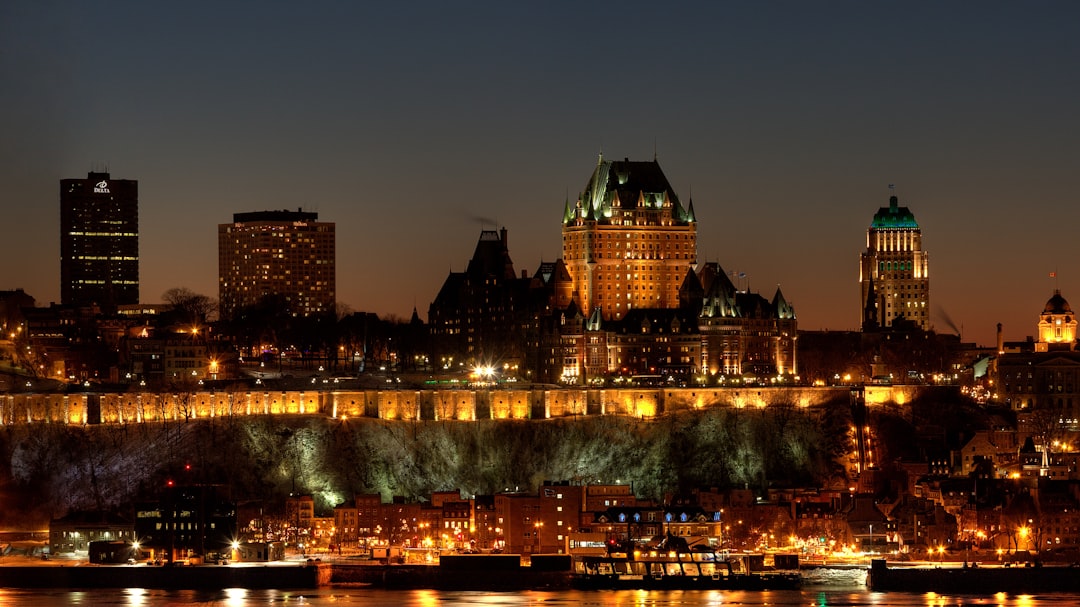

The air bites with a crispness that carries the scent of woodsmoke and a faint, sweet hint of maple, while the chatter around you shifts effortlessly between English and a rapid-fire French that feels utterly, delightfully out of place on this side of the Atlantic. You step onto cobblestones worn smooth by centuries of footsteps, and the buildings, squat and ancient, lean into each other as if sharing secrets only they remember. This isn’t some European fantasy you shelled out thousands of dollars for; this is Quebec City, standing defiant and undeniably French, the only fortified city north of Mexico, a UNESCO World Heritage Site that wears its history like a well-tailored, if slightly dusty, coat.
It’s a place where the past isn’t just preserved in museums; it’s the very foundation you walk on, the walls that rise around you, the language that tumbles from every open door. The sheer audacity of a city so thoroughly European, so stubbornly French-speaking, existing right here in North America, always throws me for a loop. You could be forgiven for thinking you’d taken a wrong turn and ended up in a forgotten corner of Brittany, until you spot a Tim Hortons sign or hear a distinctly Canadian “eh?” tacked onto the end of a sentence. This city isn’t just charming; it’s an entire experience, a living, breathing anachronism that demands you slow down and soak it all in, one flaky croissant and strong coffee at a time.
The fortification aspect isn’t just a historical footnote; it’s a tangible presence that shapes the city’s very geography and feel. You find yourself navigating ramps and staircases, passing through gates that once kept invaders out, now merely guiding tourists into a different era. The walls themselves, thick and imposing, offer panoramic views that make you realize just how strategically important this spot always was, perched high above the St. Lawrence River, daring anyone to try and take it. It’s a physical barrier that mentally transports you, creating a distinct separation from the modern world that exists just beyond its ancient embrace.
And that UNESCO designation? It’s not just for bragging rights on a brochure. It means the city has been painstakingly preserved, every stone and every facade meticulously cared for, ensuring that the “Old World Charm” isn’t just marketing fluff. It’s the real deal, a commitment to maintaining a slice of history that feels incredibly fragile and precious in our fast-paced, ever-changing world. This isn’t some theme park rendition of Europe; it’s the genuine article, complete with all the quirks, the slightly uneven sidewalks, and the profound sense of continuity that only centuries of uninterrupted existence can provide.
The Iconic Chateau Frontenac
Then there’s the behemoth, the grand dame, the architectural equivalent of a peacock strutting its stuff: the Fairmont Le Château Frontenac. You can’t miss it, even if you tried. It rises above the city like a fantasy castle plucked straight from a storybook, all copper roofs that shimmer green and gold in the sun, turrets that pierce the sky, and brickwork that seems to glow with an inner light. It’s not just a hotel; it’s the city’s undisputed visual anchor, a massive, imposing structure that dominates the skyline from every conceivable angle, daring you to look away.
From the Dufferin Terrace, stretching out in front of it, you get the full effect of its sheer scale, its unapologetic grandeur. It’s a place that makes you feel both insignificant and completely captivated, a masterpiece of late 19th-century architecture that still manages to feel timeless. You can stand there for ages, just tracing the lines of its intricate design, wondering about the history held within those walls, the dignitaries, the movie stars, the ordinary travelers who’ve passed through its opulent doors. It’s a landmark so pervasive, so deeply ingrained in the city’s identity, that any photo of Quebec City without it feels incomplete.
Sure, it’s a luxury hotel, and staying there will likely cost you an arm and a leg, probably your firstborn child too, but its value extends far beyond the price of a room. It’s a public monument, an art piece, a beacon that guides you through the winding streets of the Upper Town. You don’t have to check in to appreciate its majesty; simply walking around its perimeter, gazing up at its imposing height, or grabbing a drink in its lobby to soak in the atmosphere is enough to feel a part of its legacy. It’s a constant, reassuring presence, a reminder of the city’s enduring elegance and its commitment to a certain kind of old-school magnificence.
The Chateau isn’t just pretty; it’s steeped in history, a silent witness to countless moments that have shaped not just Quebec, but Canada itself. From its inception as a grand railway hotel to its role in hosting the Quebec Conferences during World War II, where Churchill and Roosevelt huddled to plan strategy, its walls have absorbed a staggering amount of human drama and political intrigue. It’s more than just bricks and mortar; it’s a living archive, a place where the past feels incredibly close, almost palpable, making every glance at its majestic facade a momentary brush with history.
Wander Through Petit Champlain
But if the Chateau Frontenac is the city’s grand, imposing face, then Petit Champlain is its beating, intimate heart, a labyrinth of narrow, cobblestone streets that feel like they’ve been plucked directly from a medieval European village and gently placed here. Descending into this lower town is like stepping through a portal; the air instantly feels cozier, the sounds more muted, the scale of everything shrinking to a delightfully human size. The buildings, often three or four stories tall, lean in, their stone facades adorned with brightly painted shutters and overflowing flower boxes, creating a corridor of charm that invites endless exploration.
The ground beneath your feet is uneven, worn smooth by centuries of foot traffic and the occasional horse-drawn carriage, forcing you to slow your pace, to truly wander. This isn’t a place for rushing; it’s a place for lingering, for peering into shop windows displaying everything from handcrafted leather goods to local art, or for simply marveling at the sheer density of history packed into every square foot. You’ll find yourself craning your neck to admire intricate ironwork balconies, or stopping dead in your tracks to watch a street artist sketch caricatures, completely lost in the moment. It’s a tactile, immersive experience that demands your full attention.
And that feeling of stepping back in time? It’s not an exaggeration here. With the narrowness of the streets, the absence of modern traffic (mostly), and the meticulously preserved 17th and 18th-century architecture, Petit Champlain genuinely transports you. You can almost hear the echoes of past conversations, imagine merchants hawking their wares, or picture couples strolling arm-in-arm, much as they do today. Yes, it’s a tourist magnet, especially in peak season, and you’ll share those cobblestones with plenty of other curious souls, but even the crowds can’t entirely diminish the undeniable magic of its atmosphere, the sense of being enveloped by living history.
The sensory details here are what truly make it sing: the sweet, buttery smell of crêpes wafting from a tiny café, the distant strains of an accordion player’s melancholic tune, the soft glow of gas lamps as dusk settles, turning the already quaint streets into something straight out of a postcard. Every turn reveals a new perspective, a different shopfront, a hidden alleyway that promises further discovery. It’s a place that encourages you to get lost, to follow your nose, to simply absorb the unique ambiance that pulses through its ancient stones, making it an unforgettable highlight of any Quebec City visit.
Conclusion: Embrace the Joie de Vivre
So there you have it, the audacious charm of Quebec City, a North American anomaly that delivers an authentic taste of Old-World France without the transatlantic flight. From the towering, storybook grandeur of the Chateau Frontenac, standing sentinel over the Upper Town, to the intimate, winding cobblestone embrace of Petit Champlain, every corner of this fortified city whispers tales of centuries past. It’s a unique blend of history, culture, and undeniable European flair, all wrapped up in a distinctly French-Canadian package that feels both familiar and wonderfully foreign.
This isn’t just a collection of old buildings; it’s a living, breathing testament to resilience and cultural pride, a place where the French language and traditions are not merely preserved but actively celebrated. You’ll find world-class cuisine rubbing shoulders with hearty poutine joints, sophisticated art galleries next to shops selling kitschy maple syrup souvenirs, and a deep sense of history coexisting seamlessly with the rhythms of modern life. It’s this dynamic interplay, this refusal to be pigeonholed, that gives Quebec City its truly special character, making it far more than just a pretty face.
And that fabled ‘Joie de Vivre’? It’s not just a fancy French phrase; it’s the palpable spirit of the city, an infectious enthusiasm for life that manifests in long, leisurely meals, vibrant street festivals, the casual elegance of its inhabitants, and a deep appreciation for beauty in all its forms. It’s in the way people linger over espresso on a sun-drenched terrace, in the passionate conversations you overhear, in the sheer joy of a city that knows how to savor every moment, every season, every drop of its unique heritage. It’s about finding pleasure in the small things, embracing the moment, and living life with a certain flair.
So, ditch the predictable, skip the sterile, and make your way to Quebec City. Go wander those ancient streets, let the French accents wash over you, taste the local fare, and climb those city walls. Don’t just read about its history; walk through it, breathe it in, and let its undeniable charm seep into your bones. Experience that inimitable ‘Joie de Vivre’ for yourself, because this slice of Europe, right here on our continent, is far too captivating to simply admire from afar. Go on, get out there and live a little, the Quebecois way.