
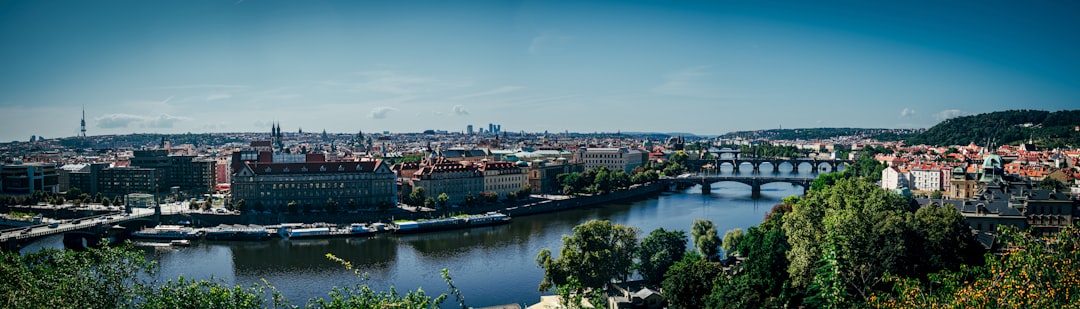

The air in Prague carries a specific kind of chill, a dampness that seeps into your bones even on a sunny day, smelling of old stone and something faintly metallic, a scent that whispers of centuries packed tight against each other. You step off the tram, and it’s there: the sheer, undeniable weight of history, not just in the cobblestones underfoot, but in the way the light catches the spires, making them gleam like something out of a child’s storybook, only far grander and a hell of a lot more real. This isn’t just another pretty European city; this is Prague, a place that practically dares you to believe in dragons and knights, a city that holds the world’s largest ancient castle complex – a sprawling, magnificent beast of architecture – right in its heart.
It’s a city that knows its own worth, unpretentious despite its beauty, still clinging to a certain raw, Eastern European edge that keeps it from becoming just another polished theme park. The “fairy tale” vibe isn’t a marketing gimmick here; it’s baked into the very fabric of the place, from the crooked alleyways to the astronomical clock that still puts on its little show every hour, drawing crowds like moths to a flame. You can feel the ghosts in the shadows, hear the echoes of revolutions and celebrations, all while the Vltava river flows on, indifferent and timeless.
But let’s be honest, while the castles and cathedrals are what draw you in, it’s the beer that truly defines Prague, a legacy as ancient and deeply ingrained as any stone archway. This isn’t just about getting a pint; it’s about a culture, a tradition of brewing that goes back longer than most countries have existed, where the simple act of drinking a golden lager is almost a sacred ritual. The Czechs don’t mess around with their pivo; it’s a matter of national pride, served cold, frothy, and cheap enough to make you wonder why you ever paid more for a watered-down domestic anywhere else. It’s the liquid soul of the city, a perfect counterbalance to all that ancient, imposing stone.
The Iconic Wonders of Prague
You can’t come to Prague and not walk the Charles Bridge, it’s practically a pilgrimage, a rite of passage, but be warned: if you hit it mid-day, especially in peak season, you’ll be shuffling in a sardine can of humanity. The trick is to get there at dawn, when the gas lamps are still flickering, casting long, dramatic shadows off the Baroque statues of saints, their faces worn smooth by centuries of wind and rain. Then, and only then, can you truly appreciate the sheer engineering marvel of it, the way it connects the Old Town to Malá Strana, a stone artery pulsing with history, the Vltava flowing silently beneath, reflecting the first blush of morning sky. The views from the bridge are postcard-perfect, sure, but it’s the quiet contemplation of those ancient stones, the weight of the stories they hold, that truly grabs you, before the selfie sticks and tour groups descend.
Once you’ve navigated the bridge, you’ll start the climb towards Prague Castle, a sprawling complex that isn’t just one building, but a city within a city, perched majestically on its hill, dominating the skyline. It’s a bit of a hike, especially if you’ve had too many cheap beers the night before, but every upward step reveals a new angle, a fresh perspective on the red-tiled roofs and the distant spires. Don’t expect a single, grand entrance like a Disney castle; this is a working historical site, a series of courtyards, palaces, churches, and gardens, each revealing another layer of Czech history. You’ll pass through security, a necessary modern annoyance, and then you’re in, surrounded by centuries of power and intrigue.
And right there, smack in the middle, piercing the sky with its dark, intricate spires, is St. Vitus Cathedral. This isn’t just a church; it’s an architectural monster, a Gothic masterpiece that took nearly 600 years to complete, and you can feel every single one of those years in its towering presence. The exterior is a riot of gargoyles, flying buttresses, and ornate carvings, almost overwhelming in its detail, but step inside, and you’re hit with a different kind of awe. The stained-glass windows, particularly the Art Nouveau masterpiece by Alphonse Mucha, flood the cavernous interior with a kaleidoscopic light, painting the ancient stone with brilliant hues. Yes, there will be queues, yes, you’ll be shuffling along with a hundred other gawkers, but for a few moments, standing beneath those impossibly high vaulted ceilings, you can almost forget the crowds and just let the sheer scale and beauty wash over you. It’s a humbling experience, a reminder of what humans can achieve when they really put their minds, and a few centuries, to it.
Unearthing Prague’s Hidden Charms
After battling the throngs on Charles Bridge and navigating the castle courtyards, your nerves might be a bit frayed, your patience worn thin by the constant jostle. This is precisely when you need to peel away from the main drag and find some breathing room, and the Royal Gardens, just beyond the official castle entrance, are your sanctuary. Most tourists, bless their single-minded hearts, charge straight for the cathedral or Golden Lane, completely missing this sprawling expanse of manicured lawns, ornate fountains, and quiet pathways. It’s a complete shift in atmosphere, a sudden hush after the clamor, where the only sounds are the rustle of leaves and the distant murmur of the city.
Wandering through these gardens, you get a different kind of panoramic view of Prague, one that feels earned, not just handed to you from a crowded overlook. You can find benches tucked away under ancient trees, offering a perfect spot to just sit, collect your thoughts, and watch the clouds drift over the spires you just left behind. There’s a particular quiet beauty to the Renaissance architecture of the Royal Summer Palace, a more intimate grandeur than the imposing castle, and the singing fountain, when it’s running, adds a gentle, melodic backdrop. It’s a place where you can genuinely slow down, appreciate the design, and feel like you’ve stumbled upon a secret, even though it’s been there for centuries, waiting patiently for those who bother to look beyond the obvious.
And once you’ve had your fill of serene greenery, it’s time to dive into the real, unvarnished Prague, the one that smells of hops and old wood. Don’t fall for the tourist traps around Old Town Square with their inflated prices and mediocre food. Instead, head into the smaller, less-trafficked streets within the Castle District, away from the main tourist arteries, and look for the unassuming doorways. These are the hospody, the local pubs, where the beer flows freely and cheaply, and the conversations are in rapid-fire Czech. You won’t find craft beer snobbery here, just honest-to-goodness Pilsner Urquell or Kozel, served in frosty mugs, often directly from a tank.
The experience in these local watering holes is as authentic as it gets. The decor is usually simple, utilitarian even, with scarred wooden tables, maybe some faded posters on the walls, and the comforting clatter of glasses. You might not understand a word of what’s being said around you, but the atmosphere is unmistakable: friendly, unpretentious, and deeply rooted in the everyday life of the city. Order a pivo, maybe a plate of nakládaný hermelín (pickled cheese), and just soak it all in. This is where you truly taste Prague, not just see it, where the “fairy tale” gives way to the gritty, wonderful reality of a city that knows how to live, and how to drink.
Conclusion: Navigating Prague on a Budget
Prague, for all its undeniable charm, can quickly drain your wallet if you’re not smart about it. The key to experiencing this magnificent city without breaking the bank is to embrace the local way of life, which, thankfully, often aligns perfectly with budget travel. Forget the overpriced tourist restaurants in the main squares; seek out the polední menu (lunch menu) at local pubs and eateries, where you can get a hearty, authentic Czech meal for a fraction of the price. Public transport is efficient and cheap, but honestly, Prague is a city best explored on foot. You’ll stumble upon unexpected courtyards, quirky shops, and stunning views that you’d miss from a tram window.
When it comes to the formidable Prague Castle queues, a little planning goes a long way. Don’t just show up at 10 AM expecting to waltz right in; that’s peak tourist hour, and you’ll spend half your morning shuffling in line. Either get there right at opening (8 AM) or aim for late afternoon (after 3 PM), when the crowds start to thin out. Better yet, buy your tickets online in advance, which often allows you to bypass the main ticket lines. Another trick: consider which circuit you really want to see. You don’t need to buy the most expensive, all-inclusive ticket if your main interest is just St. Vitus Cathedral and the Old Royal Palace. Prioritize what genuinely interests you and save some cash.
Beyond the castle, keep your eyes peeled for free walking tours – they’re a fantastic way to get an overview of the city and learn some history, though remember to tip your guide generously. Skip the souvenir shops peddling mass-produced trinkets and instead, grab a bottle of local Becherovka or some authentic Czech sweets from a supermarket. And for heaven’s sake, drink the beer. It’s not just a beverage; it’s a cultural institution, and at prices that often make it cheaper than bottled water, it’s the ultimate budget-friendly indulgence.
So, go ahead, plan that trip. Prague is waiting, ready to enchant you with its spires and its stories, but also to challenge you to look beyond the surface, to truly experience its grit and its glory. Just remember to pack comfortable shoes, a healthy dose of curiosity, and an empty stomach for all that glorious, golden beer. You won’t regret it.