
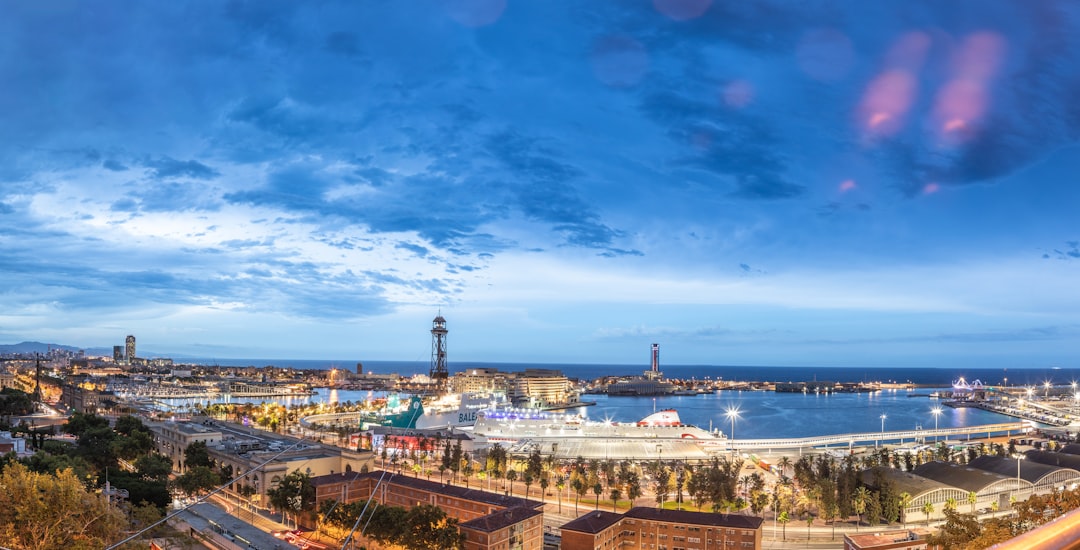

The Mediterranean air in Barcelona hits different, a salty, sun-baked breath carrying faint echoes of distant guitars and something sweet, maybe churros, maybe just the promise of a good time. This isn’t a city that whispers; it’s a city that shouts, sometimes in a joyous, drunken slur, sometimes in the silent, mind-bending language of stone and mosaic. You step off the plane, and immediately, Gaudí is there, an invisible hand pushing you towards the surreal, towards buildings that seem to have melted or grown from the earth, challenging everything you thought you knew about straight lines and sensible angles.
It’s a place where the art isn’t confined to galleries but spills onto the streets, climbs up facades, and twists around lampposts, demanding your attention, whether you’re ready for it or not. You might be innocently strolling, thinking about where to get your next coffee, and then, *bam*, you’re staring up at a dragon-scaled roof or a riot of colorful tiles, suddenly questioning your own sanity, wondering if you accidentally wandered into a dream sequence. This city doesn’t just display art; it *is* art, a living, breathing, slightly unhinged masterpiece that keeps evolving.
And then, as the sun dips below the horizon, painting the sky in hues that would make even Gaudí pause, Barcelona shifts gears, transforming from an open-air museum into an insatiable party. The clinking of glasses starts, the low rumble of conversation swells, and the aroma of garlic and olive oil becomes almost intoxicating. Suddenly, you’re not just a tourist; you’re part of the flow, swept along towards dimly lit tapas bars where plates pile high with impossibly good food, and the night stretches out, a long, delicious invitation to dance until your feet ache and your voice is hoarse. It’s a city that understands the delicate balance between profound beauty and utter, unadulterated revelry.
The Unfinished Symphony – Sagrada Família
Standing before the Sagrada Família for the first time is less like visiting a church and more like encountering a geological event, a mountain range that decided to become a cathedral, or perhaps a colossal, petrified alien organism. The sheer audacity of it, the way the stone seems to melt and flow, twisting into forms that defy gravity and conventional architectural logic, is simply staggering. You’re confronted by the different facades, each telling a distinct story, the Nativity facade looking like something carved by nature itself, overgrown with figures and flora, while the Passion facade is stark, angular, almost brutal, a chilling counterpoint to the organic exuberance. It’s a building that doesn’t just occupy space; it *dominates* it, pulling your gaze upwards, forcing your jaw to drop.
Inside, the experience is even more disorienting, in the best possible way. The columns rise like a forest of ancient trees, branching out into the ceiling, creating a canopy that feels both ethereal and incredibly solid. And the light—oh, the light—pours through the stained-glass windows in torrents of emeralds, sapphires, and rubies, painting the entire interior in a constantly shifting kaleidoscope of color. It’s not just illumination; it’s a spiritual experience, a tangible presence that bathes you, making the air feel alive, almost electric. You find yourself just standing there, head craned back, absorbing the sheer scale and the intricate details, the little snails crawling up a pillar, the geometric patterns that seem to shift and dance.
The fact that it’s still under construction, a perpetual work-in-progress, only adds to its mystique. The cranes are part of the landscape, the scaffolding a necessary layer, reminding you that this isn’t just a monument but a living, evolving dream, a multi-generational obsession. It’s Gaudí’s vision, yes, but it’s also the collective effort of countless hands, each adding their piece to this monumental puzzle. You see the subtle differences between the older, weathered stone and the newer, paler additions, a visible timeline etched into the very fabric of the building, a silent conversation between past and future. It’s a structure that transcends mere architecture, becoming a philosophical statement on ambition, faith, and the relentless pursuit of an impossible ideal.
Beyond the Postcards – Unearthing Barcelona’s Local Charm
It’s easy to get sucked into the tourist vortex in Barcelona, to follow the well-trodden paths from one guidebook highlight to the next, elbowing your way through crowds just to tick off a box. But the real soul of this city, the gritty, honest, utterly captivating bits, lie just a few blocks off those main arteries, tucked away in sun-drenched squares and down narrow, shadowed alleys. This is where you find the *real* Barcelona, the one that doesn’t care if you’re taking a selfie, the one that’s just living its life, oblivious to the throngs of camera-wielding visitors. It’s about cultivating a certain kind of curiosity, a willingness to just *turn* when something catches your eye, to let go of the map and trust your gut.
Finding these genuine local experiences isn’t about looking for a specific name in a blog post; it’s about observation, about tuning into the rhythm of the city. It’s the small, unassuming doorway with a handwritten menu taped to the glass, the faint aroma of frying *boquerones* pulling you in, or the sound of animated chatter spilling out onto the street. You might stumble upon a tiny *bodega* where the owner pours wine directly from enormous barrels, where the tapas are simple but perfect, and where everyone seems to know everyone else. These aren’t places you find; they find *you*, when you’re open to the possibility, when you’re willing to walk a little further, to peek around a corner, to ignore the glossy facades of the tourist traps.
The charm reveals itself in the details: the old man meticulously sweeping the pavement outside his artisan leather shop, the way the light catches the faded tiles of a centuries-old building, the sound of children’s laughter echoing through a quiet square as they chase pigeons. It’s in the local market, not the famous ones, but the one where people are actually doing their grocery shopping, haggling over the price of fresh fish, or sampling olives from a overflowing barrel. You see the craftspeople, not selling mass-produced trinkets, but creating beautiful things with their hands, pouring generations of skill into a piece of jewelry or a ceramic bowl. These are the moments that truly connect you to a place, the brief, authentic glimpses into the everyday life that makes Barcelona so much more than just a collection of famous buildings.
Your Barcelona Journey – Tips for an Unforgettable Escape
Barcelona, in its glorious, slightly chaotic splendor, is a city that will grab you by the collar and shake you awake, whether you’re gazing up at a fantastical façade or dancing until dawn in a smoky bar. It’s a place that demands your full attention, rewards your adventurous spirit, and leaves an indelible mark on your soul. The artistic energy is palpable, the history deep, and the late-night revelry an essential part of its very DNA. You arrive expecting beauty, and you leave having experienced something profoundly, exhilaratingly alive.
To truly make the most of your time here, you need to come prepared for a proper workout. Wear comfortable shoes, because you’re going to walk, and walk a lot, up hills, down narrow streets, across wide boulevards. Embrace the Spanish rhythm: a late dinner is the norm, and don’t be afraid to take a proper break in the afternoon, even if it’s just for a quiet coffee and people-watching. Learn a few basic phrases in Spanish or Catalan—a simple “Hola,” “Gracias,” or “Por favor” goes a long way, opening doors and warming smiles. And definitely, absolutely, under no circumstances, skip the tapas; they are not just food, they are a social institution, a delicious conversation starter.
Now, for a crucial piece of advice, especially when it comes to those architectural marvels: timing is everything. While it might be tempting to see some of the more dramatic structures or rooftop views after dark, especially for photos, I’m going to tell you to prioritize daylight visits. Not just for the light, which is obviously better for appreciating the intricate details Gaudí poured into everything, but for practical safety. Some of these rooftops, with their uneven surfaces, tight stairwells, and sometimes less-than-obvious edges, are simply safer to navigate when you can clearly see every step you’re taking. Plus, the staff presence can be thinner after hours, and you want to be able to fully immerse yourself in the art without worrying about a misstep. See the buildings in their full, glorious light, then save the nighttime revelry for the streets and the bars.
So, what are you waiting for? Stop reading about it. Book the ticket. Get yourself to Barcelona, let the city’s wild, artistic spirit wash over you, and prepare to have your expectations shattered in the most magnificent way possible. Go get lost, eat too much, and let this incredible city work its magic.