
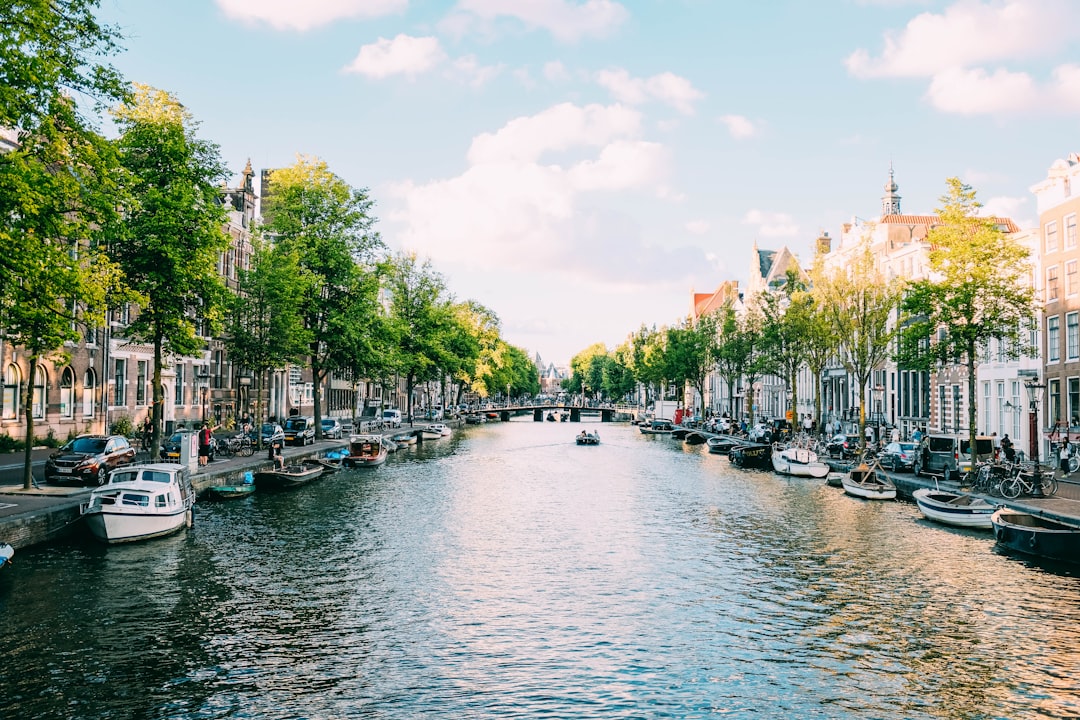

The cold bite of the wind off the Amstel, the faint metallic clang of a thousand bicycle chains, the sheer, undeniable *presence* of two wheels everywhere you look – that’s Amsterdam. You think you’ve seen a city with bikes? Try one where the population is 880,000 people and there are, give or take, 880,000 bikes. Maybe more. They’re stacked against canal railings, chained to lampposts, leaning precariously outside brown cafes, a permanent, slightly rusty fixture of the urban landscape. Walking here is for tourists, for the slow-shuffling masses gawking at gabled houses; cycling, that’s how you actually *live* it.
You don’t just observe Amsterdam from a bike; you become a part of its relentless, fluid pulse, a cog in its beautifully efficient, slightly chaotic machine. It’s the difference between watching a movie and starring in it, between reading a menu and actually tasting the bitterballen. You’re not just moving through the city; you’re *moving with* it, feeling the cobblestones under your tires, smelling the damp earth and canal water, hearing the symphony of bells and distant chatter. It’s an immersion that no canal cruise or tram ride can ever hope to replicate, a gritty, authentic connection to the very soul of this place. This isn’t just about getting from A to B; it’s about the journey, the constant, exhilarating dance with traffic, other cyclists, and your own two feet on the pedals.
Pedaling the Historic Canal Rings
The moment you push off, the city unfolds around you, not as a series of static postcards, but as a living, breathing entity. The air itself feels different down by the water, a cool dampness that carries the faint scent of diesel from the tour boats and something vaguely earthy, perhaps from the centuries of silt at the canal bottom. Your tires hum a low, steady tune on the smooth asphalt of the bike paths, then clatter a frantic rhythm over the ancient cobblestones that seem designed specifically to rattle your fillings loose. You lean into a turn, the narrow street a tunnel of leaning brick and tall, elegant windows, and suddenly a vista opens up – a bridge arching gracefully over dark water, a line of gabled houses reflected perfectly, if momentarily, in the glassy surface. It’s a constant, shifting panorama, demanding your attention, forcing you to engage with every detail.
You weave past slow-moving pedestrians, their heads tilted back in admiration, oblivious to the silent, two-wheeled torrent flowing around them, and past other cyclists, some in business suits on sleek electric models, others on rusty omafietses, their baskets overflowing with groceries. The sheer density of it all is exhilarating, a constant game of inches and split-second decisions. One minute you’re admiring the ornate carvings above a doorway, the next you’re braking hard to avoid a delivery van backing out of an alley, or a group of tourists stepping into the bike lane without a glance. It’s a test of reflexes, a lesson in assertive, yet polite, navigation.
The canal rings themselves, those concentric horseshoe shapes carved into the city’s heart, are a marvel of urban planning, and on a bike, you feel their logic, their flow. You can follow the Herengracht, with its grand merchant houses, imagining the wealth that once flowed through these waterways, or duck into a smaller side street, discovering a tiny courtyard or a cafe with just two tables outside. The bridges, countless and varied, offer constant opportunities to pause, to lean your bike against the railing, and just watch the boats glide by, the light playing on the water, the ever-present parade of life happening all around you. Each turn reveals a slightly different perspective, a new angle on architecture that has stood sentinel for centuries.
There’s a freedom in being able to stop on a whim, to pull over and just absorb a particular scene – the way the afternoon sun catches the leaning facade of a 17th-century building, making it glow ochre and rust, or the sight of a lone swan gliding silently under a low bridge. Then, with a push off the pedal, you’re back in motion, the wind in your face, the city’s pulse beating in sync with your own. It’s not always serene; sometimes it’s a frantic dodge, a quick bell ring, a muttered Dutch curse from a local, but it’s always, undeniably, alive.
Beyond the City – A Ride to Volendam
Just when the city’s intensity starts to feel a little much, when the constant vigilance and the sheer volume of humanity threaten to overwhelm, that’s your cue to point your handlebars north. Leaving Amsterdam on two wheels is like peeling back a layer of an onion; the urban grit slowly gives way to something softer, greener, infinitely more expansive. The transition is almost shockingly abrupt: one minute you’re navigating tram tracks and dodging pedestrians, the next you’re on a dedicated bike path, the air suddenly smelling of fresh water and damp earth, with only the distant hum of traffic as a reminder of the metropolis you’ve left behind. The flat landscape, a blessing and a curse for cyclists, becomes a pure joy here, allowing for effortless cruising as the city skyline shrinks in your rearview mirror.
The ride itself is a revelation, a chance to see the Holland that exists beyond the postcards taped to souvenir shop windows. You pass through small, sleepy villages, their brick houses neatly lined along canals, their gardens bursting with color. Cows graze placidly in emerald-green pastures, barely lifting their heads as you whiz by, and the occasional windmill, a genuine working one, not just a photo op, turns slowly against the vast, open sky. It’s a meditation, a rhythm of pedal strokes and passing scenery, the wind a constant companion, pushing you along or providing a gentle resistance. You feel the space, the quiet, the sheer, unadulterated *Dutch-ness* of it all.
And then, almost suddenly, you arrive in Volendam, a town that looks like it was plucked straight from a children’s storybook and carefully placed by the water’s edge. It’s undeniably ‘postcard pretty’, almost aggressively so, with its perfectly preserved wooden houses, their gabled roofs painted in cheerful blues and greens, and its harbor bobbing with traditional fishing boats. Yes, you’ll see tourists in ‘traditional’ costumes, posing for photos, and yes, it leans heavily into its quaintness, but there’s an undeniable charm to it all. The air here is salty, carrying the tang of the IJsselmeer, and the cries of gulls replace the distant sirens of Amsterdam.
Volendam is an ideal cycling destination precisely because the journey is half the fun. The bike paths are impeccably maintained, smooth ribbons of asphalt that hug the coastline or cut straight through fields, offering uninterrupted views. There’s no challenging terrain, no steep climbs, just pure, unadulterated cycling pleasure. You can stop at any point, lean your bike against a fence, and just take in the vastness of the polder landscape, the endless horizon, the sense of peace that permeates this corner of the Netherlands. Once there, you can wander the narrow streets, grab a smoked herring from a street vendor – trust me, it’s a necessary experience – and watch the boats come and go, feeling like you’ve truly escaped, if only for a few hours, the relentless churn of city life. It’s a genuine taste of rural Holland, hard-earned by your own two legs, and all the more satisfying for it.
Navigating Amsterdam Safely on Two Wheels
Alright, so you’ve embraced the two-wheeled life, you’ve felt the wind in your hair, and you’ve probably nearly run over a few oblivious tourists. Good. Now, let’s talk about staying in one piece. Amsterdam’s cycling culture is less about polite yielding and more about assertive flow. Think of it as a river: you either join the current, or you get swept away. The unwritten rules are simple, but crucial: stay to the right, keep your speed up, and for God’s sake, be decisive. Hesitation is your enemy here; it causes more chaos than a confident, if slightly aggressive, maneuver.
The biggest, most urgent piece of advice I can give you: watch those tram tracks. They’re everywhere, they’re insidious, and they will, without mercy, swallow your bicycle tire whole, sending you sprawling onto the cobblestones in a most undignified fashion. Cross them at as close to a 90-degree angle as humanly possible, and never, ever try to turn sharply while your front wheel is in one. Hand signals are a nice idea, but honestly, most locals just point or make eye contact. A good, loud bell, however, is your best friend. Use it liberally, especially for those daydreaming pedestrians who seem to believe bike lanes are merely decorative extensions of the sidewalk. They’re not.
Also, lock your damn bike. Seriously. Every single time you step off it, even for a minute. Amsterdam is a city of bikes, and unfortunately, it’s also a city of *stolen* bikes. Use two locks if you can – a sturdy chain for the frame to a fixed object, and a ring lock on the back wheel. And common sense: don’t cycle drunk. The canals are deeper than they look, and the police are less forgiving than you might hope. You’re on a bike, not a magic carpet.
Despite the minor hazards and the constant need for vigilance, embracing the bicycle is the only way to truly experience Amsterdam’s unique rhythm. It’s the freedom to stop on a whim, to duck down a narrow alley, to feel the city’s pulse under your tires. It transforms a visit into an adventure, a passive observation into an active participation. So, ditch the crowded tour buses, say no to the overpriced canal cruises. Rent a sturdy Dutch omafiets – the upright riding position gives you a great view and makes you feel like a local. Get a map, or don’t, and just get gloriously lost. Feel the city under your wheels, let the wind whip through your hair, and become a part of the beautiful, chaotic, utterly authentic dance that is Amsterdam on two wheels. It’s not just seeing Amsterdam; it’s *doing* Amsterdam.