
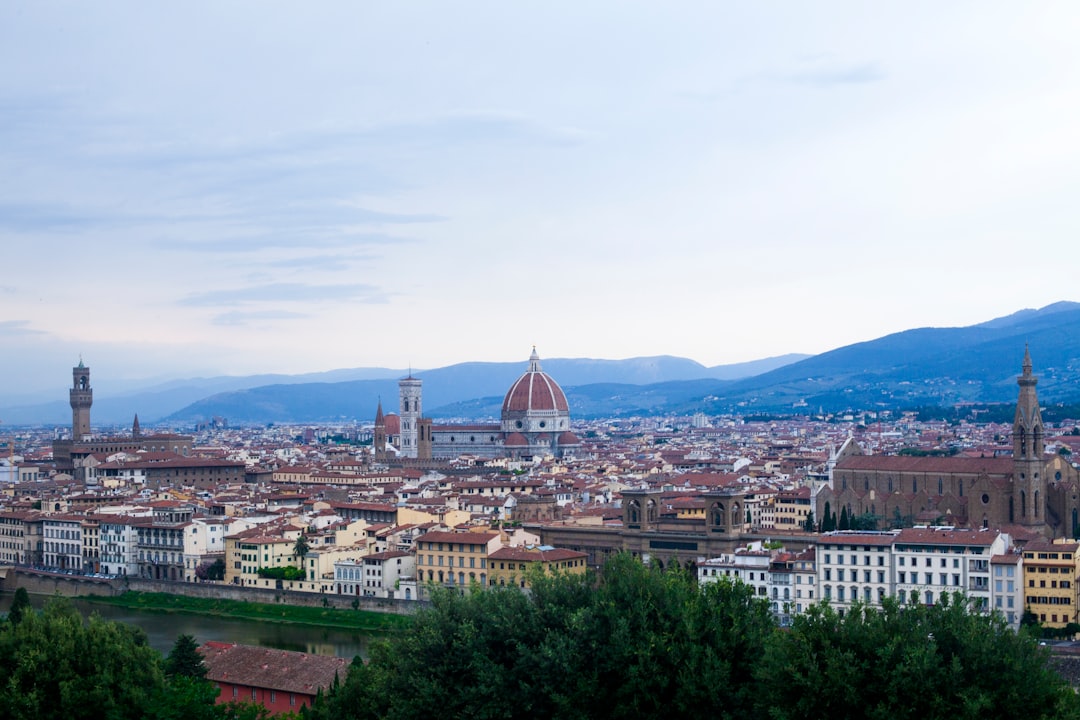

The smell of old stone and espresso, that’s Florence. Not some postcard dream, but a city that practically hums with old ideas, revolutionary thoughts hammered out centuries ago. It’s a place where you can almost taste the dust of genius, the sheer audacity of folks deciding, “You know what? Let’s just invent a whole new way of seeing the world.”
Forget what you think you know about “art history” from textbooks. Here, it’s alive, it’s in the very bricks. This isn’t just a city with a few good museums; this is the ground zero, the patient zero of the Renaissance. Everything that came after, every grand painting, every sculpted muscle, every dome that defied gravity, it all got its start right here, in this relatively small Tuscan city.
You walk these narrow streets, and you’re not just dodging selfie sticks – though there are plenty of those, trust me – you’re walking where Michelangelo probably spilled his wine, where Brunelleschi squinted at the sky, trying to figure out how to put a lid on that massive cathedral. It’s a place that forces you to confront the sheer scale of human ambition, and sometimes, human ego, all wrapped up in an undeniably beautiful package.
So, yeah, Florence. It’s not always easy. It’s popular, which means crowds. But peel back the layers of tourist infrastructure, and you get to the core of something truly extraordinary, a place that reshaped the world and still carries that swagger.
Icons of Inspiration
You hear about David, you see pictures, you think, “Okay, another famous statue.” Then you stand in front of him, and all that cynicism just… evaporates. It’s not just big; it’s alive. The way the marble seems to ripple with muscle, the tension in that hand, the furrow in his brow as he stares down Goliath, whoever Goliath might be to him in that moment. It’s a raw, almost shocking display of human form and potential, carved from a block of stone someone else thought was ruined.
The sheer scale of it hits you first, then the impossible detail. The veins on his hands, the slight bulge of his stomach, the way his weight shifts. It’s not a static pose; it’s a captured breath, a moment before action. You circle him, and he changes, the light playing off the curves, making him seem to breathe. It’s a masterclass in making stone feel like flesh, and it’s a powerful reminder of what one person, with a hammer and chisel and an insane vision, can actually achieve. Forget the gift shop; just stand there and absorb it.
Now, for the sunset ritual. Everyone goes to Piazzale Michelangelo. Everyone. It’s a pilgrimage, a mass migration up the hill, usually on foot, sometimes on a bus packed like sardines. You elbow your way to a spot, probably behind three rows of heads, and wait. The air fills with a thousand different languages, the clink of cheap prosecco bottles, and the distant murmur of the city below.
But then it happens. The sun dips, and the Arno turns to molten gold. The Duomo, usually so stoic, catches fire, and the rooftops glow orange, then deep red, then a soft, bruised purple. The city stretches out, an impossible panorama of terracotta and ancient stone, all slowly fading into the Tuscan dusk. It’s a cliché, absolutely, but some clichés are just… undeniable. The collective gasp, the sudden quiet as everyone just watches, it’s a moment that almost makes you forget the climb, the crowds, and the guy trying to sell you a light-up toy. It’s a view that demands you just shut up and look.
Savoring Authentic Florence
Forget the places with glossy menus in six languages and pictures of every dish. The real Florence, the one that feeds your soul as much as your stomach, is found down those side streets, the ones that look too narrow, too dark, or just plain uninviting. You turn a corner, follow a faint aroma of garlic and tomato, and there it is: a trattoria with a hand-scrawled sign, maybe a few plastic chairs spilling onto the uneven paving stones.
Inside, it’s probably loud. Plates clattering, Italian voices rising and falling in animated conversation, the smell of olive oil and slow-cooked meat clinging to everything. The décor isn’t “curated”; it’s just there – old family photos, dusty wine bottles, a TV in the corner showing a football match no one’s really watching. This isn’t fine dining; this is honest food, cooked by people who’ve been doing it for generations, probably with recipes passed down from their nonnas.
You order whatever the daily special is, maybe a pappa al pomodoro that tastes like sunshine and earth, or a ribollita so hearty it could cure any ailment. The pasta is simple, perfectly al dente, coated in a sauce that speaks of slow hours on the stove. And the house wine? It comes in a plain carafe, probably costs less than a fancy coffee, and it’s exactly what you need. This isn’t about Michelin stars; it’s about the pure, unadulterated joy of eating something truly local, truly authentic, without any fuss or pretension.
It’s in these places, away from the tourist traps, that you actually feel like you’re in Florence, not just visiting it. You get a glimpse into the rhythm of daily life, the importance of good food, good company, and the simple pleasure of a shared meal. It’s the essential counterpoint to all the grand art and history; it’s the grounding force, reminding you that even in a city of unparalleled genius, people still need to eat well, laugh loudly, and enjoy the simple, profound pleasures of life.
Your Florentine Journey Awaits
So, Florence. It’s more than just a pretty face on a postcard. It’s a city that demands your attention, from the monumental scale of David to the quiet, satisfying crunch of a perfectly cooked bruschetta in a no-frills trattoria. It’s a place where every cobblestone seems to whisper stories of genius, ambition, and the relentless pursuit of beauty.
You come for the art, for the sheer weight of history that hangs in the air, for the domes and the frescoes and the statues that redefined what humanity was capable of. But you stay, or at least you remember it fondly, for the moments in between: the unexpected alleyway, the taste of a truly local dish, the way the light hits the Arno just so, making everything seem a little more magical, a little more real.
Don’t just tick off the famous sights. Wander. Get lost, even if it’s just for an hour. Look up, look down, look into the courtyards. And for god’s sake, eat where the locals eat, even if it means pointing and smiling a lot. Embrace the chaos, the crowds, the sheer volume of human experience crammed into these ancient streets.
Florence isn’t just a destination; it’s an education. It’s a reminder that true brilliance often comes with a healthy dose of grit, and that the most profound experiences are often found when you step off the well-trodden path. Go. Explore. And let the city get under your skin.