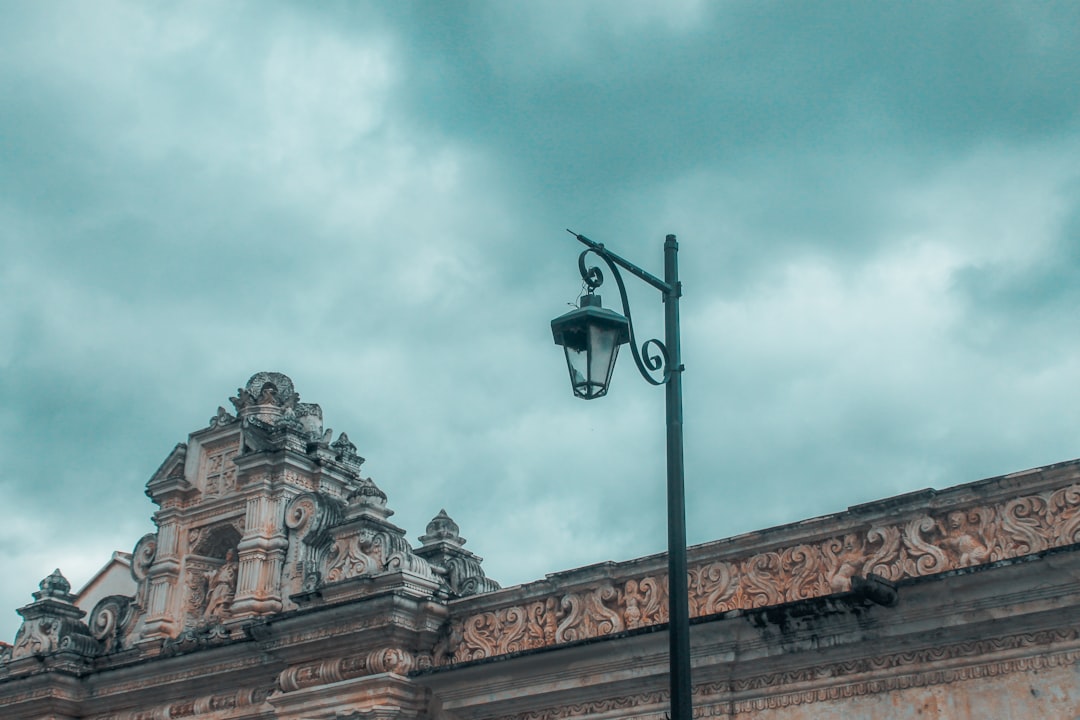

The cobblestones in Antigua aren’t just decorative; they’re a constant, uneven reminder that you’re walking on centuries of history, each stone worn smooth by countless footsteps, carts, and the occasional earthquake. The air, thin at this altitude, carries the scent of woodsmoke and brewing coffee, a subtle perfume that clings to the colonial facades, which themselves are painted in hues of ochre, terracotta, and faded azure, often peeling just enough to show their age. This isn’t some sanitized theme park; this is a place where the past isn’t just preserved, it’s lived in, a grand, slightly crumbling stage set against a backdrop that’s frankly absurd in its dramatic beauty.
Because while your eyes are busy drinking in the intricate ironwork on balconies and the silent courtyards behind heavy wooden doors, your peripheral vision is constantly snagging on something far grander, far more primal. Three behemoths loom over everything: the perfectly conical Agua, often shrouded in cloud like a shy god; the broader, more active Acatenango; and, most mesmerisingly, Fuego, which periodically grumbles and spits plumes of ash, sometimes even a fiery orange glow, a constant, low-frequency rumble that vibrates through the ground and your chest. It’s a spectacular, slightly terrifying reminder that nature here isn’t just scenery; it’s a very real, very powerful neighbor.
This relentless juxtaposition is what truly defines Antigua. You’ve got these meticulously crafted, earthquake-resistant colonial structures, the remnants of a powerful Spanish capital, standing defiant, yet utterly dwarfed by the raw, untamed power of the earth. The constant presence of those volcanoes, sometimes benign, sometimes threatening, adds an edge to the city’s charm, a sense of living on borrowed time, or perhaps, simply living more intensely. Every sunrise paints them in a new light, every sunset casts them into silhouette, and every tremor from Fuego is a jolt to the senses, a reminder that this beauty comes with a rumble.
It’s this unique blend of human endeavour and geological force, of elegant decay and raw power, that makes Antigua more than just another pretty colonial town. It’s a place that demands your attention, forces you to look up, to listen, to feel the ground beneath your feet. It’s a city that wears its history not like a costume, but like a second skin, while simultaneously being overshadowed by mountains that have been there for millennia, quietly dictating the terms of existence.
Under the Arch: Antigua’s Iconic Heart
The Arch of Santa Catalina isn’t just a postcard shot; it’s the beating, slightly chaotic heart of Antigua, a yellow-painted tunnel that funnels the city’s energy. Early mornings, before the tourist hordes descend, you might catch a lone street sweeper, or the first hesitant calls of a vendor, the light filtering through the archway onto the wet cobblestones, painting long shadows. But give it an hour, and it transforms into a human river, a constant flow of locals heading to market, students in crisp uniforms, and a scattering of wide-eyed travelers.
It’s under this arch, and on the street leading to it, that you truly feel Antigua’s pulse. Vendors hawk everything from intricately woven textiles to freshly cut fruit, their calls blending into a low hum. School kids in their blue and white uniforms spill out from side streets, laughing and jostling, their energy a stark contrast to the ancient stone around them. The scent of roasted corn, exhaust fumes from tuk-tuks, and something vaguely floral from the bougainvillea climbing every wall mixes into an olfactory signature that’s uniquely Antiguan.
And then there are the colors. Forget muted tones; Antigua throws a party for your eyeballs. The buildings themselves are often painted in bold, sun-baked shades, but it’s the details that really pop: the shocking pink of bougainvillea spilling over walls, the deep indigo of a woman’s traditional skirt, the fiery orange of a street vendor’s fruit stand, a kaleidoscope against the ancient, weathered stone. Even the graffiti, usually a scrawl of political slogans or declarations of love, adds another layer to this visual feast, a modern voice whispering among the echoes of the past.
But the real magic of the arch, the reason everyone cranes their neck, is the view. Stand just right, and framed perfectly within its ancient stone archway, is the majestic Volcán de Agua, often capped with a wispy cloud, a silent, powerful guardian. It’s a view that feels almost too perfect, like a painting, yet it’s undeniably real, a constant reminder of the raw, untamed nature that borders this meticulously crafted colonial city. It’s a cliché, sure, but sometimes, clichés are just undeniable truths, and this view, through that arch, is one of them.
Panoramic Perfection: Views from Cerro de la Cruz
If you’re going to put in a little legwork for a payoff, make it the short, steep climb up to Cerro de la Cruz. It’s not Mount Everest, mind you, just a switchback path, sometimes paved, sometimes dirt, that takes you above the city. The walk itself is a good way to stretch your legs, get the blood pumping, and shake off that extra tamale you probably shouldn’t have eaten. There are usually a few local vendors at the base offering water or a quick snack, because even a short ascent feels like a proper hike when you’re already breathing thinner air.
Once you reach the top, past the rather large, slightly imposing cross that gives the hill its name, the entire city of Antigua unfurls beneath you like a meticulously designed blueprint. The grid pattern of the streets, laid out by Spanish planners centuries ago, becomes perfectly clear, a neat checkerboard of red-tiled roofs and pastel-colored courtyards. You can pick out the ruins of old churches, the central park, even the arch you were just standing under, looking like a toy from this vantage point. It’s a humbling perspective, seeing the whole human endeavor laid out so neatly.
But it’s the volcanoes that truly dominate the panorama from Cerro de la Cruz. From here, you get an unobstructed, sweeping view of all three: the imposing, symmetrical cone of Agua, often looking like a painted backdrop; the sprawling, rugged mass of Acatenango; and, if you’re lucky, the subtle, constant puff of smoke from Fuego. Their sheer scale, their silent, ancient presence, puts the entire city into perspective. Antigua, for all its charm and history, feels like a temporary settlement at the foot of these geological titans, a fleeting moment in their long, rumbling existence.
This viewpoint isn’t just about pretty pictures; it’s about getting a sense of place, understanding the geographical context of this unique city. You see how the mountains hug it, how the valleys cradle it, and how every single building is oriented towards those looming peaks. It’s a moment to pause, breathe in the slightly cooler air, and appreciate the grand design, both natural and man-made, that makes Antigua so utterly captivating. It’s a view that sticks with you, a mental map you carry as you descend back into the charming chaos of the streets below.
Savoring Antigua: Coffee, Markets & Colonial Flavors
You can’t talk about Antigua without talking about coffee. It’s not just a beverage here; it’s the lifeblood, the reason many people even settled in these volcanic foothills. The rich, dark soil, the high altitude, the shade from the surrounding trees – it all conspires to produce some of the best beans on the planet. And you can smell it everywhere: the roasting, the brewing, a constant, comforting aroma that drifts from open doorways and mixes with the general street smells. Forget your fancy chain coffee shops; this is the real deal, grown, roasted, and brewed within spitting distance.
Finding a good cup isn’t hard; finding a great one means seeking out the smaller, less flashy spots where the focus is on the bean itself. You can taste the difference, a rich, complex flavor that’s miles away from the burnt sludge served up elsewhere. Many places will even let you watch the roasting process, the beans tumbling in a giant drum, turning from pale green to deep, oily brown, releasing that intoxicating fragrance. It’s an education in a cup, a direct line from the volcanic slopes to your morning ritual, often served with a small, sweet pan dulce that melts in your mouth.
Beyond the coffee, Antigua’s local market is an absolute sensory overload, a glorious, sprawling mess that’s a world away from the manicured tourist shops. Forget the souvenir stalls near the main square; head to the actual market where locals do their shopping. The air is thick with the smell of ripe fruit, pungent spices, fresh cilantro, and something vaguely meaty. It’s loud, it’s crowded, and it’s gloriously authentic. You’ll weave through narrow aisles, dodging porters with impossible loads on their heads, past pyramids of avocados and mountains of brightly colored textiles.
Here, you can find everything from obscure root vegetables you’ve never seen before to intricately woven fabrics, handmade leather goods, and the kind of street food that makes your eyes water in the best possible way. Grab a pupusa from a woman cooking over a small charcoal grill, or a bag of freshly cut mango with lime and chili. It’s a place where you don’t just shop; you experience. The haggling, the laughter, the sheer volume of human activity – it’s a raw, unfiltered slice of Antiguan life, a reminder that beyond the pretty colonial facades, there’s a vibrant, working city that thrives on its own rhythm.
Your Antigua Adventure Awaits
So, what you’ve got in Antigua is this wild, improbable cocktail: centuries of human ambition poured over ancient volcanic rock, stirred with the daily grind of coffee beans, and garnished with a constant, slightly thrilling threat of eruption. It’s a city that doesn’t just show you history; it makes you feel it underfoot, taste it in the air, and see it framed against the dramatic, ever-present backdrop of nature’s raw power. It’s a place where every corner turned reveals another layer, another story, another striking view that makes you pull out your phone, even though no picture truly does it justice.
For the backpacker, the budget traveler, the curious wanderer, Antigua is an absolute dream. It’s incredibly walkable, small enough to navigate on foot, yet dense enough to offer endless exploration. Hostels are plentiful and often housed in charming colonial buildings with leafy courtyards. The food, from street vendors to sit-down restaurants, is generally affordable and always delicious, especially if you venture beyond the main tourist drag. You’ll find a community of like-minded travelers, swapping stories of volcano hikes and bus journeys, making it easy to connect and share experiences.
Leaving Antigua feels different from leaving other cities. You don’t just pack up your bags; you carry a piece of it with you. The memory of the cobblestones underfoot, the rumble of Fuego in the distance, the smell of roasting coffee, the kaleidoscope of colors in the market – it all settles into your bones. It’s a place that gets under your skin, not just because it’s pretty, but because it feels alive, a vibrant, breathing entity that constantly reminds you of the delicate balance between human endeavor and the overwhelming force of the natural world.
So, stop reading about it. Stop looking at pictures. Get yourself to Antigua. Walk those uneven streets, breathe that volcanic air, drink that incredible coffee, and let the city work its magic. Go climb a volcano, or just watch one erupt from a rooftop bar. Experience the realness, the grit, the undeniable charm of a place that refuses to be anything less than spectacular, a city that truly lives up to the hype, and then some.