
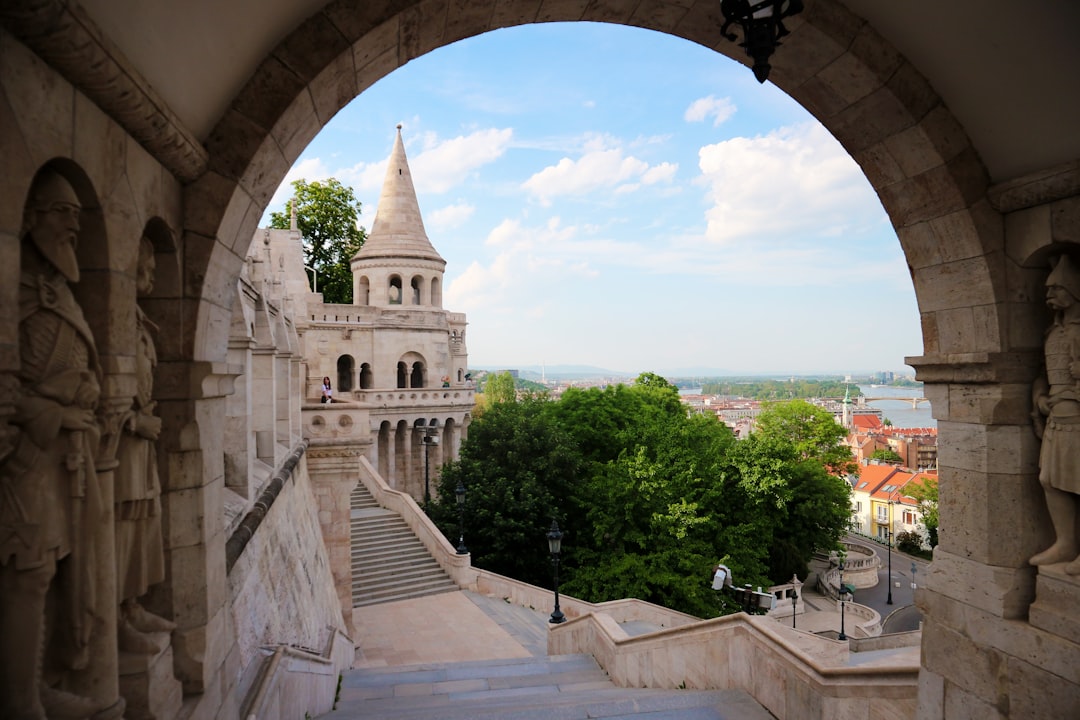

The wind off the Danube, even in late spring, carries a certain bite, a whisper of history and the promise of something a little rough around the edges. You step out onto the street, and the sheer scale of the Austro-Hungarian Empire hits you square in the face – buildings that look like they were carved by gods, not masons, standing shoulder to shoulder with graffiti-streaked walls leading to courtyards where the bass thumps until dawn. This isn’t just another pretty European city; it’s a place that wears its past like a heavy, ornate coat, but underneath, it’s got a punk rock heart.
Every corner you turn seems to reveal another architectural marvel, a grand dame of a building that demands you crane your neck and just stare. The Parliament, the Opera House, the sheer, unapologetic opulence of it all makes you wonder if they ever built anything small here. It’s a city designed to impress, to make a statement, and centuries later, it still does, even if some of its facades are a little crumbly around the edges.
But don’t let the gilded cages fool you. While some might call Budapest the “Paris of the East,” that’s a polite lie. Paris is pretty, refined, a bit snooty. Budapest? Budapest is Paris after a few too many shots of pálinka and a late-night argument, all its inhibitions stripped away, revealing something far more interesting, far more real. It’s got the elegance, sure, but it’s also got a raw, gritty energy that Paris can only dream of.
This city doesn’t just offer you beauty; it offers you an experience, a collision of old-world charm and unapologetic, modern-day chaos. It’s a place where you can spend your morning soaking in ancient waters and your night dancing in a derelict building, and it all feels perfectly normal, perfectly Budapest.
Soak & Unwind: Budapest’s Thermal Traditions
Stepping into Széchenyi Thermal Bath for the first time is like walking onto a movie set designed by a slightly eccentric emperor. The grand, butter-yellow buildings rise around you, steam curling off the outdoor pools into the crisp morning air, creating a hazy, otherworldly scene. It’s enormous, sprawling, and utterly, wonderfully overwhelming, a testament to a city that truly understands the art of public bathing.
You navigate the maze of indoor pools, each with a different temperature, some smelling faintly of sulfur, others just clean and warm. But the real draw, the postcard shot, is outside. Here, people of all shapes and sizes, speaking a dozen different languages, bob in the warm water, some playing chess on floating boards, others just staring up at the grand architecture. It’s a communal experience, a human soup where everyone is just… soaking, shedding the day’s worries or gearing up for the night’s adventures.
Now, a word to the wise: Széchenyi can get absolutely mobbed. By midday, especially on a weekend, it feels less like a tranquil spa and more like a very warm, slightly damp sardine can. If you want to experience the true magic, the quiet contemplation and the rising mist, you need to be an early bird. Get there right when they open, or even better, in the late afternoon as the sun starts to dip, casting long shadows across the ornate buildings. The light changes, the crowds thin out, and you get a real sense of the place, not just the tourist circus.
Despite the potential for crowds, you can’t come to Budapest and skip Széchenyi. It’s an institution, a rite of passage. Even if you have to elbow your way to a spot in the main pool, the sheer scale of it, the history seeping from every stone, makes it an essential part of the Budapest experience. Just manage your expectations about personal space, and you’ll be fine.
Danube Dreams: Parliament by Night
The Danube at night is a different beast entirely. During the day, it’s a working river, a highway of barges and tourist boats, but once the sun goes down, it transforms into a mirror, reflecting the city’s illuminated grandeur. You board your chosen vessel, the air growing colder as you pull away from the bank, and the city lights begin to truly come alive.
Then, it appears, slowly, majestically, as you round a bend: the Hungarian Parliament Building. Bathed in a warm, golden light, every spire, every arch, every intricate detail is highlighted against the inky blackness of the sky. It’s not just a building; it’s a glittering, gothic fantasy, a colossal structure that looks like it was plucked from a fairytale and dropped right onto the riverbank. Photos don’t do it justice; you have to see it with your own eyes, the way it dominates the skyline, a silent, powerful sentinel.
As the boat glides past, you get a full, unhurried view, from the detailed façade to the towering central dome. But the Parliament isn’t the only star of this show. The Chain Bridge, strung with its own necklace of lights, looks like a jeweled pathway across the water. Buda Castle, perched high on its hill, glows with an ancient dignity, watching over the city. The reflections dance on the water, distorting and reforming, a constant, shifting kaleidoscope of light.
A Danube night cruise isn’t just a tourist activity; it’s a necessary pilgrimage. It’s the best way to grasp the sheer scale and architectural might of Budapest, to see how the city embraces its river. Grab a drink, find a spot on the open deck, and just let the spectacle wash over you. It’s one of those moments that makes you feel small in the best possible way, reminding you of the enduring power of human creation.
Hidden History: Beyond the Mainstream Baths
While Széchenyi gets all the glory and the Instagram likes, Budapest’s thermal bath scene runs far deeper, stretching back to the Ottoman occupation. If you’re looking for something a bit more subdued, a little less like a theme park and more like a journey back in time, you need to venture beyond the big names. There are other options, places where the steam feels thicker, the light dimmer, and the history more palpable.
Take Kiraly Bath, for instance. Tucked away on the Buda side, it doesn’t boast the grand yellow façade of Széchenyi. Instead, you’ll find a more unassuming entrance, leading into a complex that feels genuinely ancient. Its most striking feature is the large, domed main pool, illuminated by shafts of natural light filtering through small, colored glass panes in the ceiling. It’s a far cry from the bright, open-air pools, feeling more like a sacred, hushed grotto.
Inside Kiraly, the air is thick with steam and the scent of minerals, and the silence is often broken only by the gentle lapping of water. The pools are smaller, more intimate, and the crowd is usually a mix of locals and a handful of curious travelers seeking a different kind of soak. You can move between the various temperature pools, from icy cold to scalding hot, feeling the centuries of tradition in every stone, every tile. It’s less about splashing around and more about quiet contemplation.
This isn’t the place for a lively chat or a game of chess; it’s a place for quiet relaxation, for letting the warm water work its magic on tired muscles and a weary mind. Kiraly Bath offers a stark contrast to the more famous options, providing a glimpse into the city’s Ottoman past, a raw, authentic thermal experience that feels genuinely timeless. It’s a reminder that sometimes, the best experiences are found just a little off the beaten path, away from the selfie sticks and the crowds.
Conclusion: Your Budapest Adventure Awaits
Budapest, then, isn’t just a place to visit; it’s a place to experience, to feel, to immerse yourself in. It’s a city that manages to be both profoundly historic and relentlessly modern, a place where the weight of the past is balanced by an undeniable zest for life. You can spend your days wandering through grand boulevards and ancient baths, letting the thermal waters soothe your soul, and your nights getting lost in the labyrinthine ruin bars, letting the city’s raw energy ignite your spirit.
The memories you’ll carry away won’t just be pretty pictures; they’ll be the feeling of warm water on your skin, the chill of the Danube wind, the dazzling sight of the Parliament lit up against the night sky, and the thumping bass of a forgotten courtyard. It’s a city that leaves an impression, a place that gets under your skin and stays there, demanding that you remember its unique blend of elegance and grit.
It’s not just about seeing the sights; it’s about engaging with them, letting the city tell its story through its architecture, its waters, and its irrepressible nightlife. Budapest challenges you to look beyond the surface, to find the real heart of a city that has seen it all and is still standing, still thriving, still inviting you in.
So, what are you waiting for? This isn’t a city to gently consider; it’s a city to dive into headfirst. Pack your swimsuit, your most comfortable walking shoes, and an open mind. Budapest is calling, and trust me, you want to answer that call. Go explore this city that truly knows how to live.