
The air bites, sharp with the tang of sulfur and pine, a low rumble vibrating through the soles of your boots long before you see the steam plumes reaching for the cold sky. This isn’t just a pretty picture on a brochure; this is Yellowstone, America’s first national park, a sprawling, untamed beast of a place where the earth itself breathes fire and ice, a raw, elemental spectacle that makes you feel both insignificant and utterly alive. It’s a place that demands your attention, your respect, and maybe, just maybe, a slightly thicker jacket than you packed.
Forget your manicured gardens and curated experiences; Yellowstone is a wilderness that decided to put on a show. It’s a geological anomaly, a supervolcano simmering beneath your feet, constantly reminding you that nature isn’t just beautiful, it’s profoundly powerful, occasionally terrifying, and always, always in charge. You come here not just to look, but to witness the sheer, unadulterated force that shaped this continent, a constant churning of geothermal wonders that are as mesmerizing as they are dangerous.
The Fiery Heart of Yellowstone
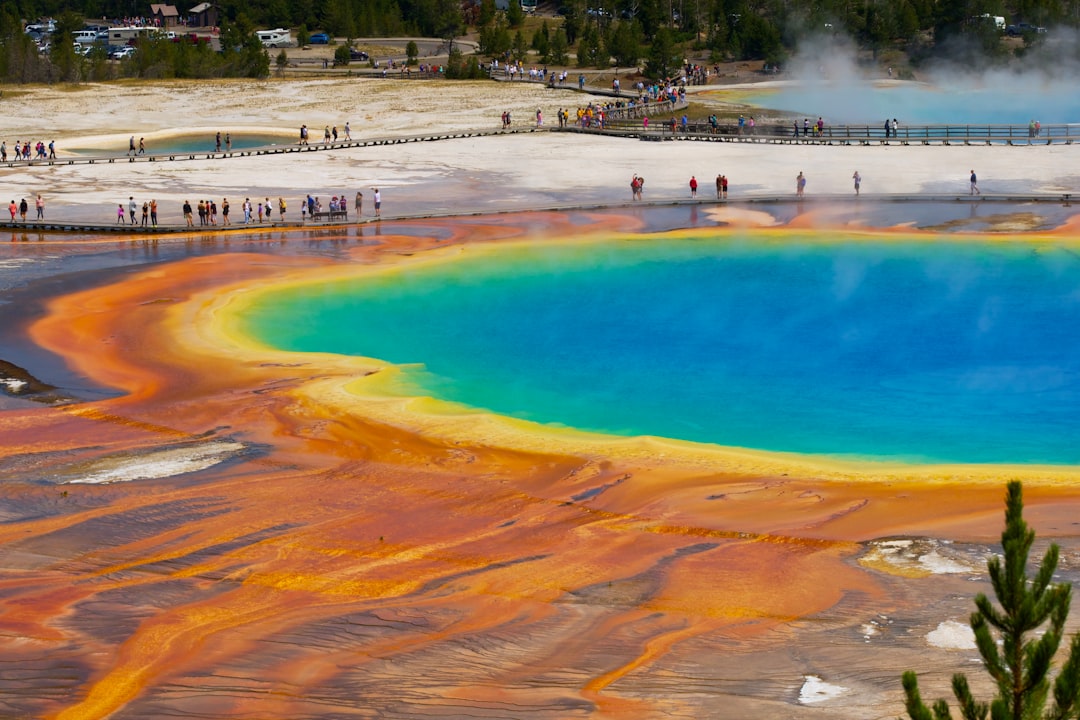
You walk the boardwalk, a slightly cynical observer among the throngs, but then you see it: Grand Prismatic Spring. It’s not just big; it’s a colossal, steaming eye staring up from the earth, a riot of impossible colors that make your brain stutter. The steam billows off its surface, hot and heavy, a constant, humid breath that sometimes obscures the view, sometimes parts just enough to reveal the startling, almost artificial blues, greens, yellows, and oranges swirling beneath.
It’s a marvel of microbial life, really, this colossal hot tub. The distinct bands of color aren’t paint, they’re billions of thermophilic bacteria thriving in different temperature zones, each colony a different shade, creating a living, breathing spectrum that defies belief. The deep blue in the center is the hottest, too scorching for even these hardy organisms, giving way to emeralds and golds as the water cools towards the edges, a natural masterpiece painted by heat and microscopic life.
Standing there, the air thick with the smell of minerals and damp earth, the sheer scale of it hits you. It’s wider than a football field, a steaming, technicolor cauldron that feels like it belongs on another planet. The constant hiss of the steam, the faint gurgle of the superheated water, the way the light catches the mist and turns it iridescent – it’s a full-body experience, a primal connection to the planet’s internal furnace that makes you forget the crowds, the selfie sticks, and everything else for a few breathless moments.
Wildlife Encounters in Lamar Valley
If the geysers are Yellowstone’s beating, fiery heart, then Lamar Valley is its wild, untamed soul. This isn’t where you go for quick photo ops; this is where you go to earn your wildlife sightings, to sit in the freezing predawn dark with a thermos of bad coffee, scanning the horizon through binoculars, hoping for a glimpse of something truly wild. It’s a commitment, an act of faith, and when it pays off, it’s nothing short of magic.
The valley itself is a vast, sweeping expanse of grassland, carved by the Lamar River, bordered by mountains that seem to stretch into forever. It’s an open-air cafeteria for the park’s largest grazers – bison, elk, pronghorn – and where the prey goes, the predators follow. This wide-open terrain, unlike the dense forests elsewhere, is what makes it a prime hunting ground and, consequently, the best place in the lower 48 to spot grizzlies and, especially, wolves.
You learn patience out here. You learn to spot the subtle movements, the dark specks against the distant treeline that might resolve into a wolf pack on the prowl, or the tell-tale hump of a grizzly digging for roots. There’s a particular thrill that runs through the assembled wildlife watchers when a ranger points to a distant hillside and whispers, “Wolves.” Suddenly, everyone is scrambling for their scopes, a shared, silent excitement, watching these intelligent, elusive hunters move through their domain, a stark reminder that this isn’t a zoo; these animals are living, hunting, surviving on their own terms, and you’re just a privileged observer.
Navigating the Overwhelming Beauty
Yellowstone is enormous, a sprawling wilderness that utterly dwarfs any human attempt to contain or fully comprehend it. Trying to “see it all” in a single trip is a fool’s errand, a recipe for exhaustion and frustration. The park is roughly the size of Rhode Island and Delaware combined, with hundreds of miles of roads, and the distances between major attractions are far greater than you’d imagine, meaning you’ll spend a lot of time in your car, often stuck behind a bison jam that moves at its own glacial pace.
Effective planning isn’t just recommended; it’s absolutely essential unless you enjoy spending your vacation in a state of bewildered chaos. You need to pick your priorities: Is it geysers? Wildlife? Hiking? Focus on one or two distinct areas for a few days each, rather than trying to crisscross the entire park. Book accommodations inside the park *months* in advance, or be prepared for a long commute from gateway towns, which, while charming, add significant drive time to your already packed days.
This is precisely why the shoulder seasons – late April/May or late September/October – are your best bet for a more authentic, less maddening experience. Sure, some services might be closed, and the weather can be unpredictable, swinging from crisp sunshine to sudden snow flurries, but the trade-off is fewer crowds, more readily available parking, and a different kind of beauty. The light is softer, the air crisper, and the wildlife often more active and visible without the constant stream of summer tourists. It’s a chance to feel the park’s immense solitude, to truly connect with its wildness without fighting for a viewpoint.
Your Yellowstone Adventure Awaits
So, you’ve seen the earth boil, watched the colors swirl in geothermal pools, and perhaps, with a bit of luck and a lot of patience, witnessed a grizzly lumbering across a distant meadow or a wolf pack moving with chilling precision. Yellowstone isn’t just a collection of sights; it’s an immersive, often overwhelming, always unforgettable encounter with the raw, untamed power of nature, a place that leaves an indelible mark on your memory.
It’s a place that strips away the superficial, forcing you to confront the sheer scale and indifference of the natural world, while simultaneously filling you with wonder. The smells, the sounds, the vastness of the landscapes, the sudden, heart-stopping appearance of a wild animal – these are the moments that stick, the experiences that redefine your idea of what a “park” can be.
Don’t just add it to your bucket list; start planning your assault on its grandeur. Do your homework, pack smart, and prepare to be humbled. This isn’t a trip you take lightly, but it’s one that will reward your efforts tenfold, leaving you with stories that stretch far beyond the confines of a postcard. Go. See it for yourself. Just don’t forget your binoculars and that extra layer.